

Hey there! As a supplier of Multi Student Desks, I often get asked this burning question: Are multi student desks better made of solid wood or particle board? Let's dive right into it and break down the pros and cons of each material to help you make an informed decision.
Solid Wood Multi Student Desks
Solid wood has always had a special place in the world of furniture. There's just something about its natural beauty and durability that makes it a top choice for many.
Advantages
- Durability: Solid wood desks are built to last. They can withstand the daily wear and tear that comes with a busy classroom environment. Kids are going to be writing, leaning, and moving around on these desks, and solid wood can handle it all. It's less likely to crack or break under pressure, which means fewer replacements and repairs in the long run.
- Aesthetic Appeal: The natural grain and color variations of solid wood give each desk a unique look. It adds a touch of warmth and elegance to any classroom. Whether you opt for the rich tones of oak, the light hues of maple, or the rustic charm of pine, solid wood desks can enhance the overall aesthetic of the learning space.
- Environmental Friendliness: Wood is a renewable resource. When sourced from sustainable forests, solid wood desks are an eco - friendly choice. They have a lower carbon footprint compared to some synthetic materials, and at the end of their life cycle, they can be recycled or repurposed.
Disadvantages
- Cost: Solid wood desks tend to be more expensive than those made of particle board. The cost of the raw material, along with the time and labor required for processing and finishing, drives up the price. This can be a limiting factor for schools with tight budgets.
- Maintenance: Solid wood needs proper maintenance to keep it looking its best. It can be susceptible to scratches, dents, and moisture damage. You'll need to regularly clean and polish the desks, and in some cases, apply a protective finish to prevent warping or cracking.
- Weight: Solid wood desks are heavier than particle board desks. This can make them difficult to move around, which might be a problem if you need to rearrange the classroom frequently.
Particle Board Multi Student Desks
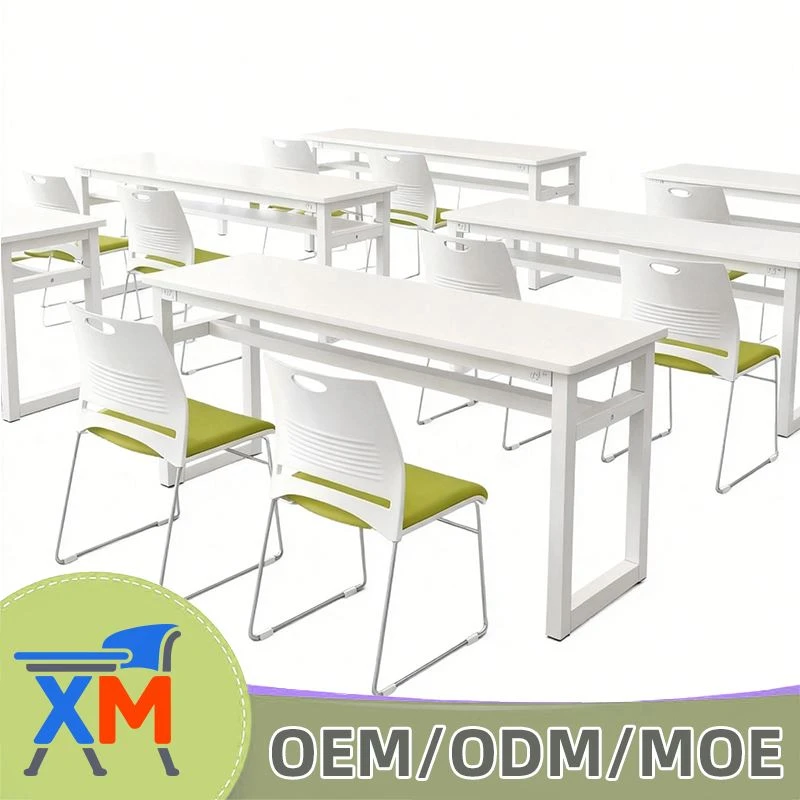
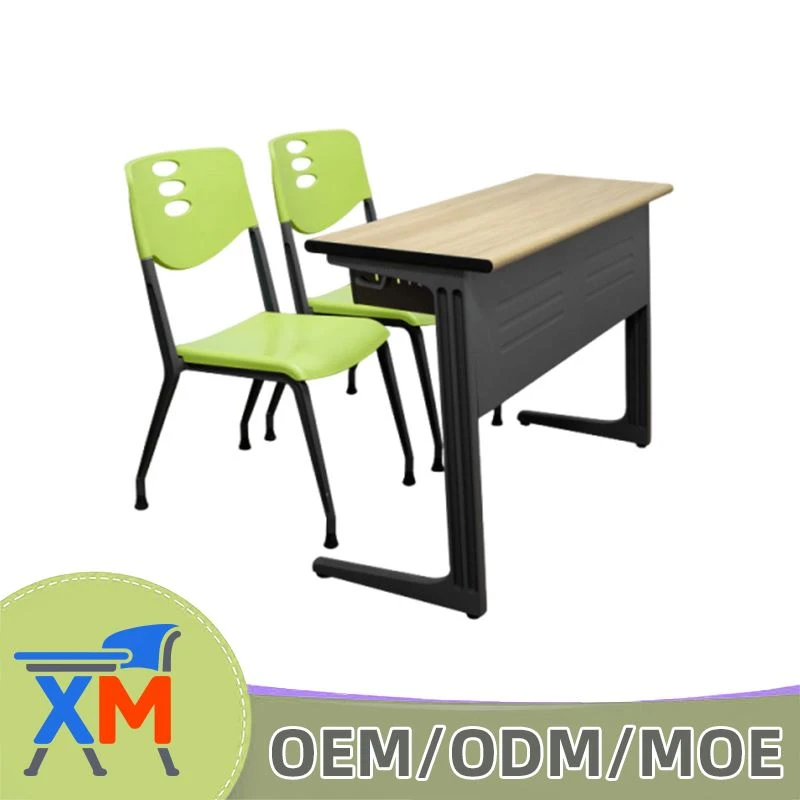
Particle board is a widely used material in the furniture industry. It's made from wood particles, sawdust, and resin, which are compressed together to form a solid panel.
Advantages
- Affordability: One of the biggest advantages of particle board desks is their low cost. They are much more budget - friendly than solid wood desks, making them a popular choice for schools that need to furnish a large number of classrooms on a limited budget.
- Lightweight: Particle board desks are lighter than solid wood desks. This makes them easier to move and rearrange, which is great for teachers who like to change the classroom layout to suit different teaching styles or activities.
- Versatility: Particle board can be easily shaped and molded into different designs. It can be veneered with a variety of finishes to mimic the look of solid wood or other materials, giving you a wide range of options to choose from.
Disadvantages
- Durability: Particle board is not as durable as solid wood. It can chip, crack, or swell when exposed to moisture or excessive pressure. In a classroom environment, where spills and heavy use are common, this can be a significant drawback.
- Environmental Concerns: Some particle board products are made with formaldehyde - based adhesives, which can emit harmful gases into the air. However, there are now many low - or zero - formaldehyde options available on the market.
- Aesthetic Limitations: While particle board can be veneered to look like solid wood, it often lacks the natural beauty and authenticity of real wood. The veneer can also peel or wear off over time, revealing the particle board underneath.
Factors to Consider When Choosing
When deciding between solid wood and particle board multi student desks, there are several factors you should take into account:
- Budget: This is often the most important factor for schools. If you have a tight budget, particle board desks may be the more practical choice. However, if you can afford to invest in high - quality furniture that will last for years, solid wood desks are a great option.
- Classroom Environment: Consider the level of traffic and usage in the classroom. If the desks will be used by a large number of students or in a particularly active environment, solid wood may be more durable. On the other hand, if you need to frequently move the desks around, the lightweight nature of particle board may be more beneficial.
- Aesthetic Preferences: Think about the overall look and feel you want to create in the classroom. If you prefer a natural, rustic, or elegant look, solid wood desks are the way to go. If you're more concerned with functionality and cost, particle board desks with a suitable veneer can still provide an acceptable appearance.
- Environmental Impact: If sustainability is important to you, look for solid wood desks sourced from sustainable forests or particle board products with low - or zero - formaldehyde emissions.
As a Multi Student Desks supplier, I've seen firsthand the different needs and preferences of schools. I can help you weigh the pros and cons of each material and find the perfect desks for your classroom. Whether you're looking for Multi Person Student Desk options or other types of school furniture, I'm here to assist you.
If you're interested in purchasing multi student desks for your school, I encourage you to get in touch with me. We can discuss your specific requirements, budget, and timeline. I'll work with you to find the best solution that meets all your needs and provides a comfortable and functional learning environment for your students.
References
- "Furniture Materials: A Guide to Solid Wood and Particle Board" - Woodworking Magazine
- "Sustainable Furniture Choices for Schools" - Environmental Education Journal
- "Classroom Furniture: Durability and Aesthetic Considerations" - Education Today Magazine