

Hey there! I'm a supplier of Double Seater School Desk, and today I wanna chat about a super important topic: how much space do double seater school desks require?
Why Space Matters for Double Seater School Desks
First off, let's talk about why the space for these desks is such a big deal. In a school setting, the right amount of space can make a huge difference in students' comfort and productivity. If the desks are too crowded, students might feel cramped, which can lead to distractions and even health issues like poor posture. On the other hand, if there's too much space, it can waste valuable classroom real - estate and make the classroom feel empty and less engaging.
Standard Dimensions of Double Seater School Desks
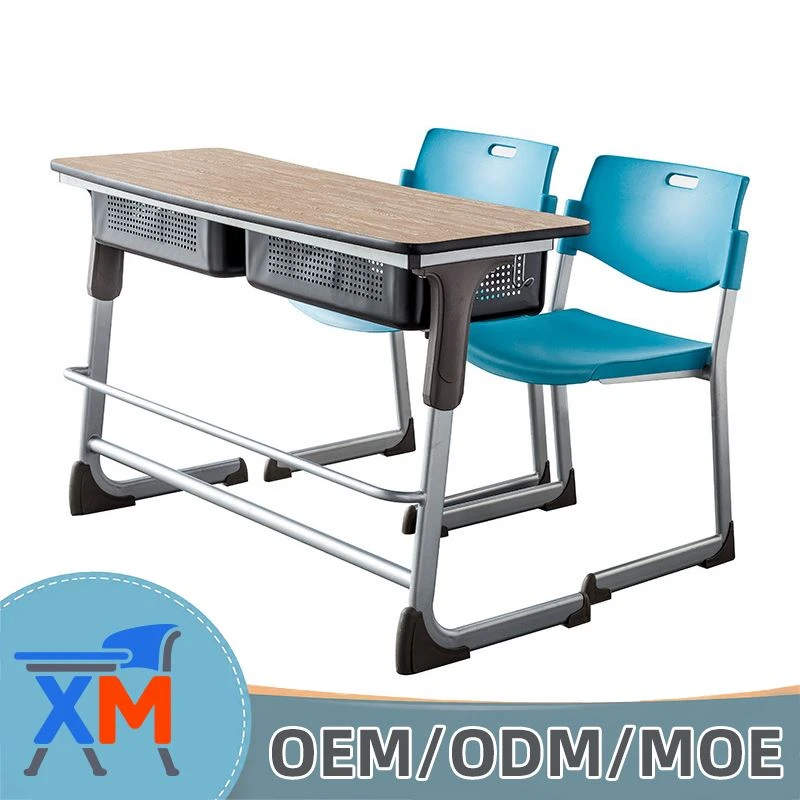
Most double seater school desks have some common dimensions. Usually, the length of a double seater desk can range from about 120 cm (47 inches) to 150 cm (59 inches). This gives each student enough room to place their books, notebooks, and writing materials. The width of these desks is typically between 60 cm (24 inches) and 80 cm (31 inches). This width allows for a comfortable working area for two students side by side without them constantly bumping into each other.
The height of double seater desks is also crucial. It should be adjusted according to the age group of the students. For elementary school kids, the height might be around 60 - 70 cm (24 - 28 inches), while for middle and high school students, it can be between 70 - 80 cm (28 - 31 inches).
Calculating the Space Needed in a Classroom
When we're talking about how much space double seater desks need in a classroom, it's not just about the desk dimensions themselves. We also have to consider the space for students to move around, open and close their chairs, and access the desks.
For each double seater desk, we need to add some extra space in front and behind it. In front of the desk, we need at least 60 cm (24 inches) of space for students to pull out their chairs and sit comfortably. Behind the desk, about 30 - 40 cm (12 - 16 inches) is enough for students to get up and move without disturbing others.
Let's say we have a double seater desk that is 130 cm long and 70 cm wide. If we add the extra space in front (60 cm) and behind (35 cm), the total length of the area occupied by the desk and the necessary clearance is 130 + 60+ 35 = 225 cm. The width remains the same as the desk width, which is 70 cm.
Different Types of Double Seater School Desks and Their Space Requirements
- Double Combination School Desk: These desks often come with additional features like storage compartments or adjustable parts. Because of these extra elements, they might take up a bit more space. The storage compartments can add to the width or depth of the desk, so we need to account for that when calculating the space. For example, if the storage compartments on the sides of the desk add an extra 10 cm to the width, we need to make sure there's enough room in the classroom layout.
- Kids Double School Desk: Designed for younger students, kids double school desks are usually smaller in size. They are more compact, so they require less space compared to desks for older students. However, we still need to provide enough space for kids to move around and play. Since kids are more active, they might need a bit more freedom to stretch their legs and arms, so the clearance in front and behind the desk should still be sufficient.
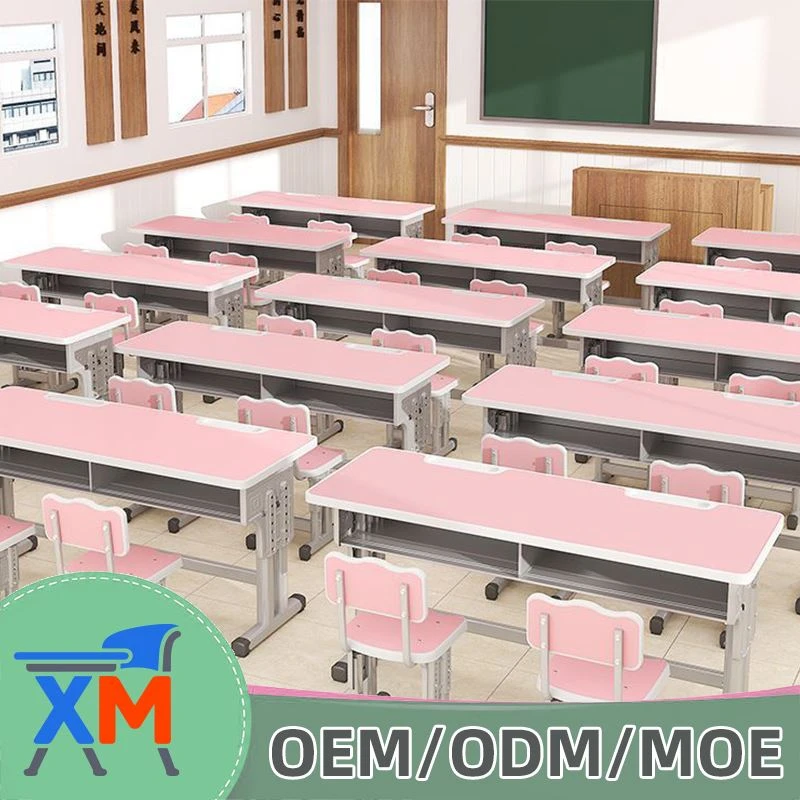
- Double Desk Classroom: When planning a classroom with double desks, we need to think about the overall layout. We should arrange the desks in rows or in a more interactive layout, depending on the teaching style. If we want a more collaborative classroom, we might want to group the double desks together. But this also means we need to make sure there are wide enough aisles for teachers and students to move between the groups. Usually, an aisle width of 80 - 100 cm (31 - 39 inches) is ideal for easy movement.
Factors Affecting the Space Requirements
- Student Age and Size: As mentioned before, younger students need different - sized desks compared to older students. Also, younger kids might need more space for movement and exploration. High school students are more likely to sit still for longer periods, so we can be a bit more conservative with the space around their desks.
- Teaching Methods: If the teaching method involves a lot of group work, we need to have enough space for students to move between desks and work together. On the other hand, if it's a more traditional lecture - based teaching, we can have a more compact desk arrangement.
- Classroom Equipment: In some classrooms, there might be additional equipment like projectors, whiteboards, or storage cabinets. These items also take up space, so we need to subtract that from the available area when placing the double seater desks.
How Our Double Seater School Desks Can Fit Your Classroom
As a supplier, we understand the importance of space optimization. Our Double Seater School Desk is designed to maximize the use of space while providing a comfortable and functional learning environment.
We offer desks with different dimensions to suit various classroom needs. Whether you're dealing with a small and cozy classroom or a large lecture hall, we have the right desk for you. Our desks are also made with high - quality materials, so they are durable and can withstand the daily wear and tear of a busy school environment.
Contact Us for Your Double Seater School Desk Needs
If you're in charge of setting up a classroom or looking to upgrade your existing school furniture, we'd love to help you out. We can provide you with detailed measurements and layout suggestions based on your specific classroom requirements. Contact us to start a conversation about how our double seater school desks can transform your learning space.
References
- Educational Facilities Planner's Guide, National Clearinghouse for Educational Facilities
- School Furniture Design and Space Utilization, Journal of Educational Architecture