

Okay, so you're running a double desk classroom and you're scratching your head about how to arrange those desks for individual study. Well, you've come to the right place! I'm a supplier of Double Desk Classroom, and I've got some solid tips for you.
Why Arrangement Matters for Individual Study
First off, let's talk about why the way you arrange desks in a double desk classroom is a big deal for individual study. When students are trying to focus on their own work, a good layout can make all the difference. It can reduce distractions, give students a sense of personal space, and even boost their productivity.
A poorly arranged classroom, on the other hand, can lead to a lot of problems. Students might get distracted by their neighbors, feel cramped, or have trouble accessing their study materials. So, getting the arrangement right is crucial.
Factors to Consider
Before we dive into the actual arrangement methods, there are a few factors you need to take into account.
Classroom Size
The size of your classroom is probably the most important factor. A small classroom will require a different arrangement than a large one. If you've got a small space, you'll need to be more creative with how you fit in the double desks. You might have to go for a more compact layout to make the most of the available space.
On the other hand, a large classroom gives you more flexibility. You can spread out the desks and create more open areas for students to move around.
Number of Students
The number of students in your class also plays a role. If you have a lot of students, you'll need to find an arrangement that can accommodate them all without making the classroom feel overcrowded. If you have a smaller class, you can focus on creating a more comfortable and spacious environment.
Teaching Style
Your teaching style can influence the desk arrangement too. If you like to move around the classroom and interact with students one-on-one, you'll need an arrangement that allows you easy access to each desk. If you mostly use lectures, you might be able to get away with a more traditional layout.
Arrangement Methods
Rows and Columns
One of the most common ways to arrange double desks in a classroom is in rows and columns. This is a tried-and-true method that works well for individual study. It gives each student a clear view of the front of the classroom, which is great for listening to lectures and following along with the teacher.
To set up rows and columns, start by measuring the length and width of your classroom. Then, decide how many rows and columns you can fit in the space. Make sure there's enough space between the rows for students to move around comfortably.
The advantage of this arrangement is that it's easy to manage. You can easily see all the students from the front of the classroom, and it's simple to keep track of who's doing what. However, it can be a bit boring and might not be the best for promoting interaction between students.
Clusters
Another option is to arrange the double desks in clusters. This involves grouping the desks together in small groups of 4 or 6. Clusters are great for promoting collaboration and interaction between students. They can also be a good option for individual study, as students can still focus on their own work while being part of a small group.
To create clusters, you can move the double desks together in a circular or rectangular shape. Make sure there's enough space in the middle of the cluster for students to share materials and work together.
The downside of clusters is that they can be a bit more chaotic. Students might get distracted by their neighbors, and it can be harder for the teacher to keep an eye on everyone. However, if you manage the classroom well, clusters can be a great way to create a more engaging learning environment.
U-Shape
The U-shape arrangement is a popular choice for classrooms that want to promote both individual study and interaction. In this arrangement, the double desks are arranged in a U-shape around the front of the classroom. The teacher can stand in the open end of the U and interact with the students.
This arrangement gives students a clear view of the front of the classroom, which is great for listening to lectures. It also allows for easy interaction between students and the teacher, as the teacher can easily move around the U and talk to each student.
The advantage of the U-shape arrangement is that it's a good balance between individual study and collaboration. However, it does require a bit more space than the rows and columns arrangement, so it might not be suitable for small classrooms.
Using Our Double Desk Products
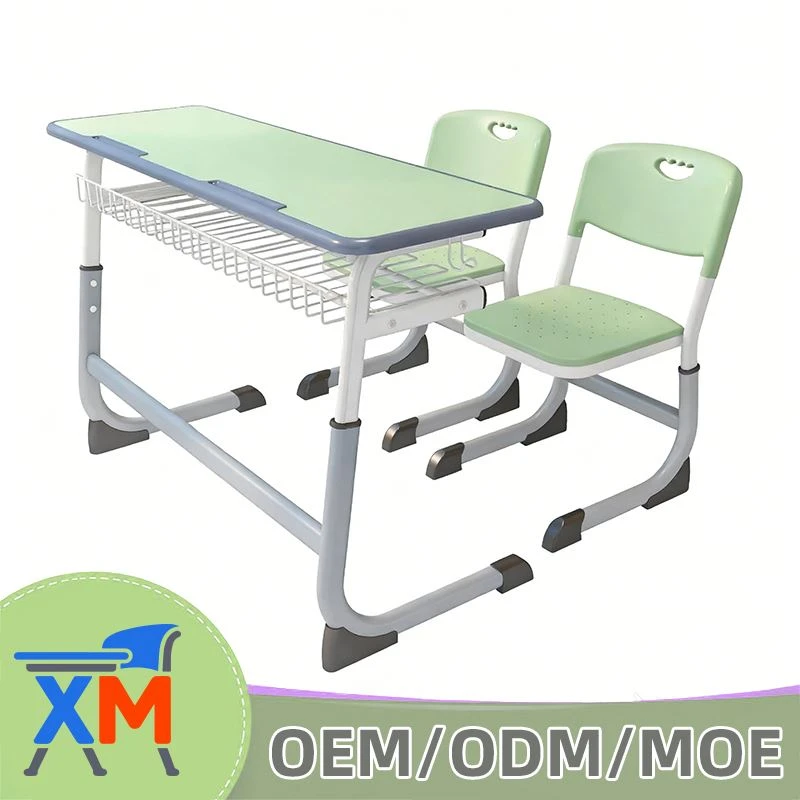
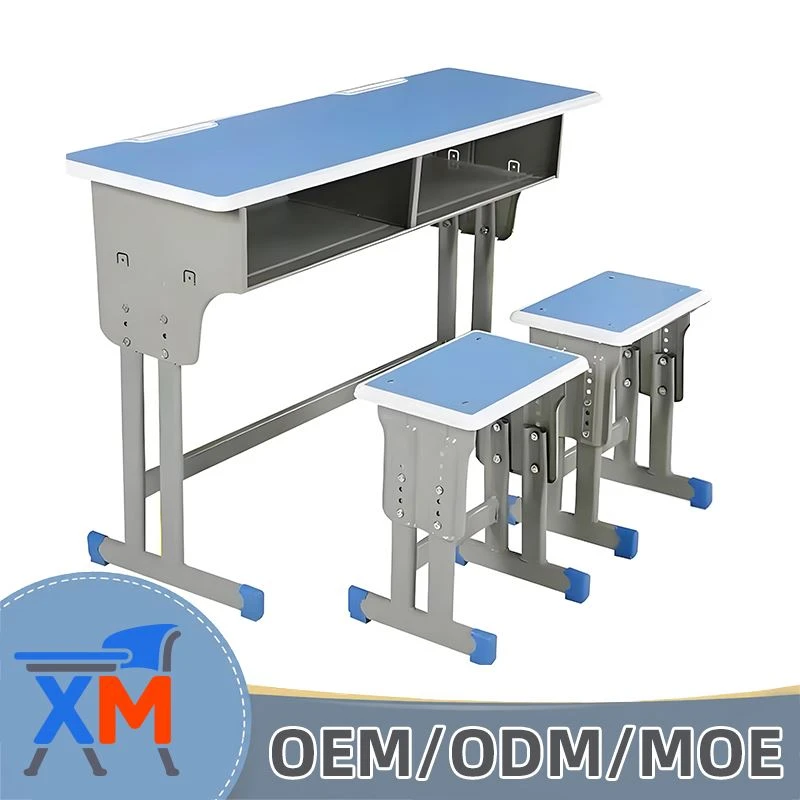
As a supplier of Double Desk Classroom, we offer a variety of products that are perfect for individual study. Our Kids Double School Desk is designed with the needs of young students in mind. It's sturdy, comfortable, and has enough space for all their study materials.
Our Double Seater School Desk is a great option for older students. It's more spacious and has a modern design that students will love. And if you're looking for something a bit more unique, our Double Combination School Desk is the perfect choice. It combines different features to create a desk that's both functional and stylish.
Conclusion
Arranging the desks in a double desk classroom for individual study is all about finding the right balance. You need to consider the size of your classroom, the number of students, and your teaching style. Whether you choose rows and columns, clusters, or a U-shape arrangement, make sure it meets the needs of your students.
And if you're in the market for high-quality double desks, look no further. Our products are designed to provide a comfortable and productive learning environment for students. If you're interested in learning more about our products or have any questions about desk arrangement, don't hesitate to reach out. We're here to help you create the perfect classroom setup for individual study.
References
- Johnson, A. (2020). The Impact of Classroom Layout on Student Learning. Journal of Educational Psychology.
- Smith, B. (2019). Effective Desk Arrangements for Individual Study. Educational Research Quarterly.