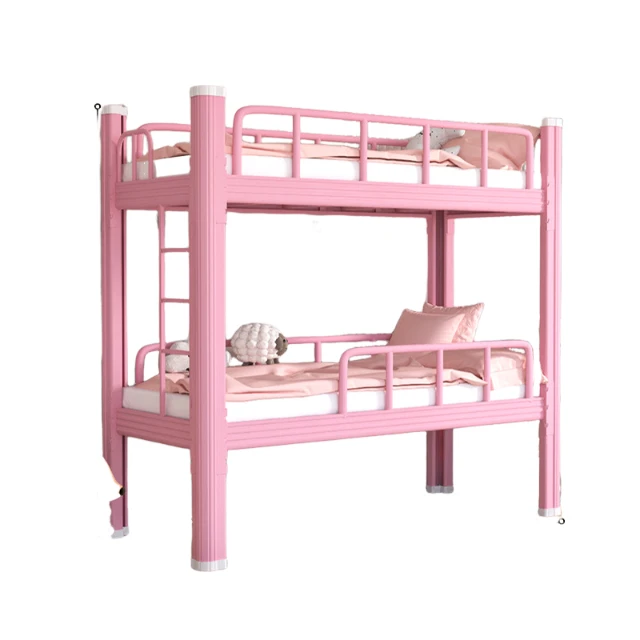
The manufacturing process for dormitory beds generally involves several stages-such as design, material processing, structural forming, assembly, and surface treatment-with each step directly influencing the bed's stability and service life.
Dimensions, height, and structural configuration (e.g., single or bunk beds) must be determined based on the intended use environment. Designs are optimized using ergonomic principles to ensure user comfort and efficient space utilization. Load-bearing requirements and safety standards are also factored in to establish benchmarks for subsequent production.
This stage focuses on processing raw materials. Metal bed frames typically involve cutting, punching, and bending steel tubing, followed by welding to form the basic framework. Wooden bed bases require cutting, sanding, and moisture-proofing treatments to ensure smooth, flat surfaces that resist deformation. Precision in processing and structural consistency are emphasized during this phase.
Assembly and fastening involve connecting the headboard, footboard, support beams, bed base, and auxiliary components according to design specifications, followed by a check of all connections for tightness. For bunk beds, guardrails and ladders are installed, and stability adjustments are made to ensure the overall structure is safe and reliable.
The final stages are surface treatment and quality inspection. Metal components usually undergo powder coating or baked enamel finishing to enhance rust and corrosion resistance. Finished beds undergo load-bearing tests, stability tests, and safety inspections; they are cleared for shipment and use only after confirming there is no structural looseness or deformation.