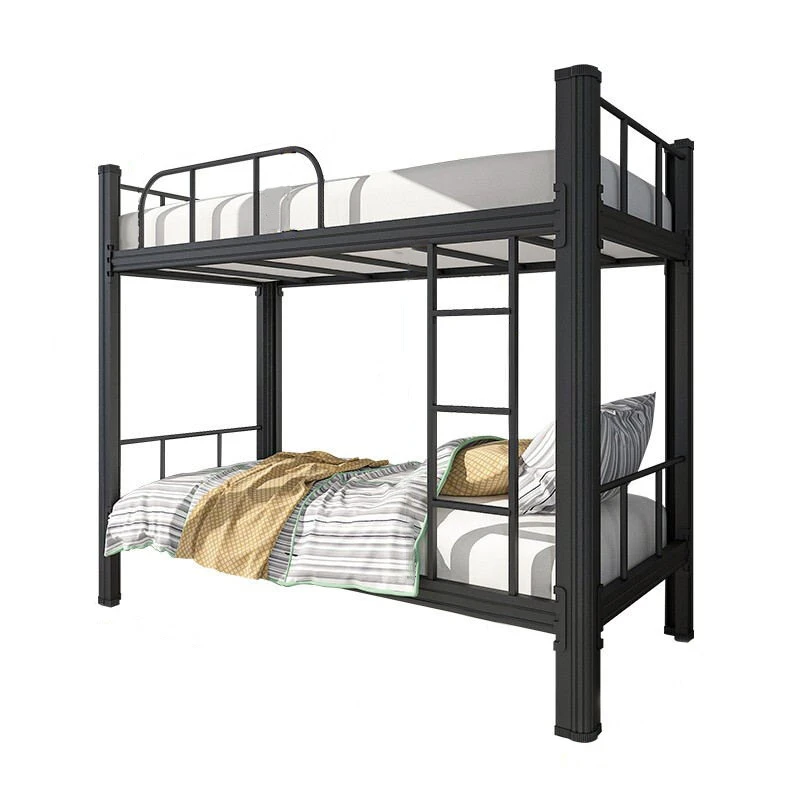
Dormitory beds are essential pieces of furniture designed specifically for communal living environments, characterized primarily by structural stability, efficient space utilization, safety, and practicality.
Structurally, dormitory beds are defined by their stability and durability. Typically constructed with metal or solid wood frames, they offer high load-bearing capacity to withstand long-term, frequent use. The design is simple yet robust; components are securely connected via screws or welding to ensure the bed remains stable and resistant to wobbling or deformation during daily use.
Dormitory beds excel in space efficiency. Designs such as bunk beds or loft beds allow for higher occupancy within limited dormitory space, while the area beneath the bed can accommodate desks or storage units, thereby maximizing overall space utilization. Such designs are ideally suited for communal living settings.
Safety and practicality are also key considerations. Bed edges are typically rounded, and bunk beds are equipped with guardrails and non-slip ladders to minimize safety risks. Additionally, the space beneath the bed-or integrated structural features-enhances storage capabilities, helping to keep the dormitory environment tidy and organized.