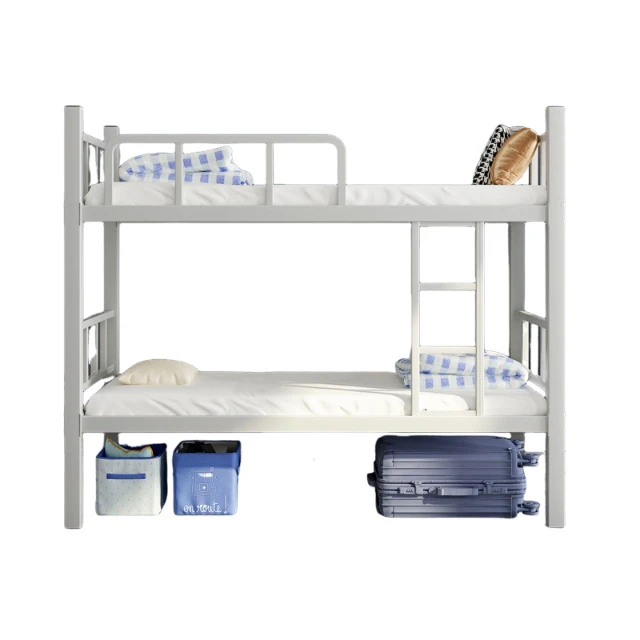
The choice of material for dormitory beds depends primarily on the usage environment, cost requirements, and durability needs; common options include metal, wood, and composite materials, each with distinct characteristics.
Metal is the most common choice for dormitory beds, typically featuring a steel tube or wrought-iron structure assembled via welding or bolting. This material offers high strength and load-bearing capacity, resists deformation, and is well-suited for long-term, high-frequency use. Additionally, powder coating or baked enamel finishes provide rust and corrosion resistance, thereby extending the bed's service life.
Wooden dormitory beds are often found in higher-standard dormitories or student apartments, typically constructed from solid wood or engineered wood. While wooden beds offer a natural aesthetic and a comfortable feel, they are slightly less durable and moisture-resistant than metal counterparts, requiring protective surface treatments to prevent moisture damage or cracking.
Composite designs combining metal and wood-such as a metal frame paired with a wooden bed base-are also utilized. This structural approach ensures overall stability while enhancing user comfort, making it a widely adopted choice in modern dormitory furniture.